.webp)
.webp)
%2B(7).webp)
.png)
The headlines are often designed to be scary. You may have seen the research from Texas Tech (April 2026) suggesting that up to 40% of weight lost on GLP-1 receptor agonists like Ozempic, Wegovy, and Mounjaro can come from lean muscle [1].
While that number is startling, it is not inevitable. With properly calculated protein intake ($1.2$ to $2.0 \text{ g/kg}$ of adjusted body weight), resistance training, and specific nutrient timing, you can cut lean mass losses down to 10–15% of your total weight lost.
The Full Picture: Quality Over Quantity
Headlines often ignore the STEP 1 trial data, which showed that while participants lost lean mass, they lost significantly more fat mass. The net result? Their lean mass as a proportion of total body weight actually increased by 3 percentage points [2]. Furthermore, a 2026 study in The Lancet Diabetes & Endocrinology found that GLP-1 users actually showed improved muscle quality—specifically less fatty infiltration—meaning the muscle that remains is often healthier and more functional [3].
Muscle Preservation: At a Glance
- Protein targets: 1.2 - 1.5 g / kg/ day
- Protein distribution: 25-40 g per meal
- Protein frist eating: protein before carbohydrates
- Strength training: 2-3 sessions per week
- Creatine monohydrate: 3-5 g daily
- Hydration: 73-100 oz/day
- DEXA scanning every 3-6 months
10 Strategies to Protect Your Muscle
1. Calculate Protein Using "Adjusted Body Weight"
Most online calculators over-estimate protein needs for people with high adipose tissue. A 2025 Joint Advisory recommends 1.2 to 2.0 g of protein per kilogram of adjusted body weight [4].
Example: If you weigh 250 lbs but your goal weight is 150 lbs, your adjusted weight for calculation is roughly 175 lbs. Your target: 96 to 128 grams of protein daily.
2. Follow the "Leucine Rule" (Protein Distribution)
Your muscles can only process so much protein at once. To trigger Muscle Protein Synthesis (MPS), you need roughly 2.5 to 3 grams of leucine per meal, which equals 25–40 grams of total protein [5]. Spreading 100g of protein across three meals is significantly more effective than eating it all at dinner.
3. Eat Protein First
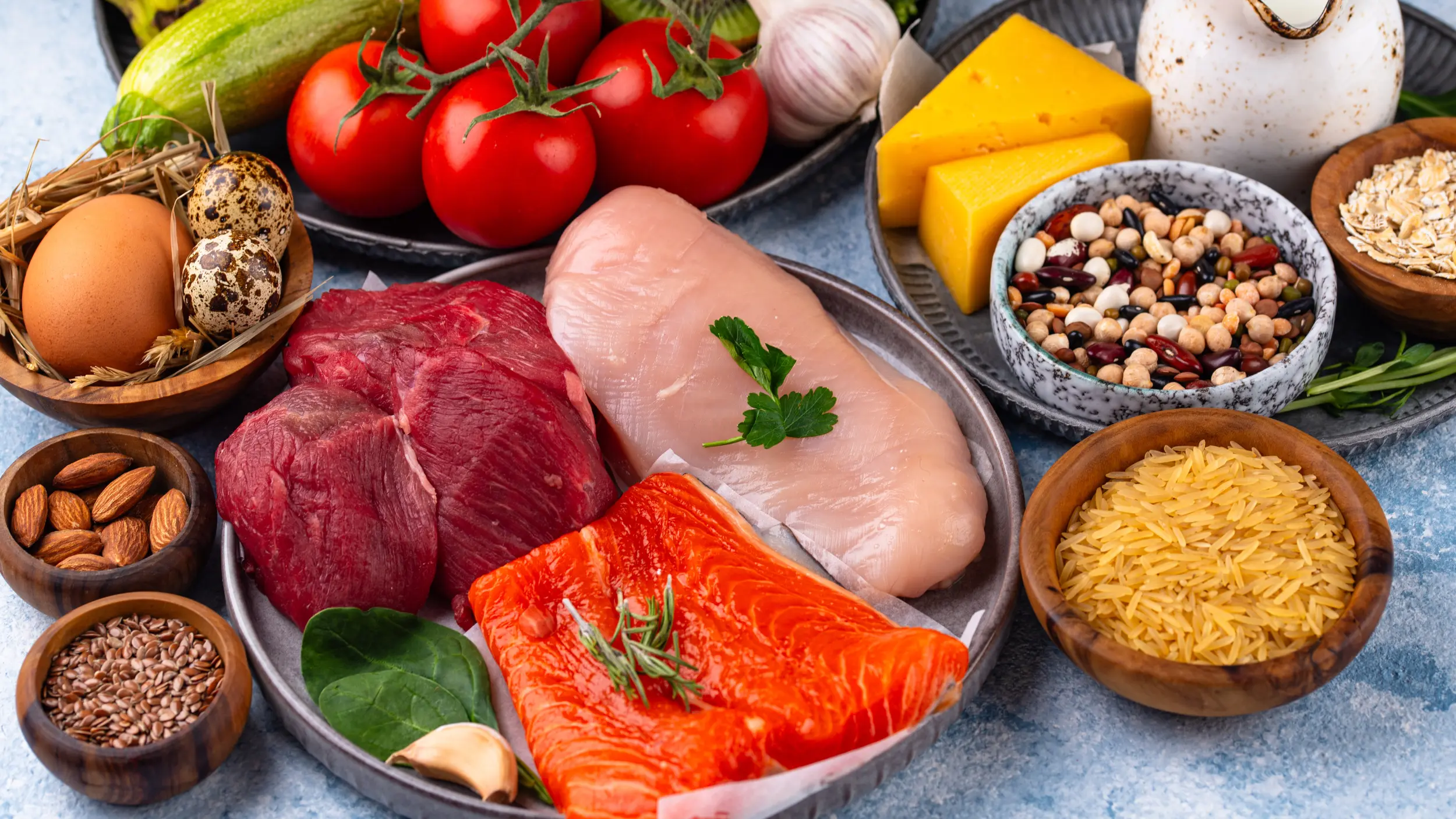
GLP-1s slow gastric emptying, meaning you get full incredibly fast. If you start with salad or bread, you’ll be too full for the chicken or tofu. Always eat your protein first to ensure the most muscle-protective macronutrient gets in before your appetite shuts off.
4. Compound Resistance Training (2-3x Weekly)
Without training, 25-40% of weight lost is lean mass. With training, that drops to 10-15%. Focus on compound movements—squats, rows, and presses—that recruit multiple muscle groups at once. As noted by trainers tracking GLP-1 clients, resistance training is the single strongest signal for your body to "hold onto" muscle.
5. Time Your Nutrition Around Workouts
Avoid training in a deeply fasted state on a GLP-1. Have a small protein-rich snack (like Greek yogurt or a shake) 60–90 minutes before training. Consume another 25–40g of protein within an hour after your workout to support recovery.
6. Supplement with Creatine Monohydrate
Creatine is one of the most researched supplements in the world. It increases hydration within muscle cells and boosts exercise capacity, making it a low-effort, high-reward addition to a GLP-1 regimen. A standard dose is 3–5 grams daily.
7. Hydrate to Support Protein Synthesis
GLP-1s can blunt thirst signals. Dehydration directly impairs muscle repair. Aim for the higher end of the 73–100 oz daily recommendation, especially if you are increasing your fiber intake or exercise frequency [6].
8. Avoid "Crash" Weight Loss
Losing weight too fast (more than 1–2 lbs per week) forces the body to break down muscle protein for fuel through the glucose-alanine cycle [7]. If the scale is dropping too rapidly, you are likely losing muscle, not just fat.
9. Track Body Composition (DEXA)
A standard scale cannot differentiate between fat and muscle. Get a baseline DEXA scan before or at the start of treatment. Repeat every 3–6 months to ensure your weight loss is coming from the right compartments.
10. Work with a GLP-1 Specialized Dietitian
The 2025 Joint Advisory recommends Medical Nutrition Therapy (MNT) as a core pillar of GLP-1 care [4]. A Registered Dietitian (RDN) can personalize your protein targets and help you manage GI side effects.
- Vedic Nutrition offers telehealth support with RDs specializing in GLP-1 pharmacology.
- Cost: 95% of clients pay $0 out-of-pocket with insurance like BCBS, Aetna, or UnitedHealthcare.
Conclusion: The "Insurance" of Muscle
Roughly half of all GLP-1 patients eventually discontinue the medication. Preserving muscle now is your insurance policy. If you keep your muscle while losing fat, you end up with a higher metabolic rate, making it much easier to keep the weight off if you ever transition off the medication.
References
- Texas Tech University. (April 2026). "Lean Mass Loss in GLP-1 Receptor Agonist Users."
- New England Journal of Medicine. (2021). "Once-Weekly Semaglutide in Adults with Overweight or Obesity (STEP 1)."
- The Lancet Diabetes & Endocrinology. (2026). "Muscle Quality and Fatty Infiltration in GLP-1 Therapy."
- Joint Advisory: ASN, OMA, & The Obesity Society. (2025). "Nutritional Support for Patients on Anti-Obesity Medications."
- Journal of the International Society of Sports Nutrition. (2023). "Leucine thresholds for MPS stimulation."
- Cleveland Clinic. (2024). "Hydration guidelines for GLP-1 users."
- Mass General Brigham Grand Rounds. (2024). "Metabolic adaptation and glucose-alanine cycles in rapid weight loss."
.svg)
.svg)




.webp)

.webp)
.webp)
.webp)
.webp)


.webp)
.webp)
.webp)


.webp)